How Long Does It Take to Learn Violin?
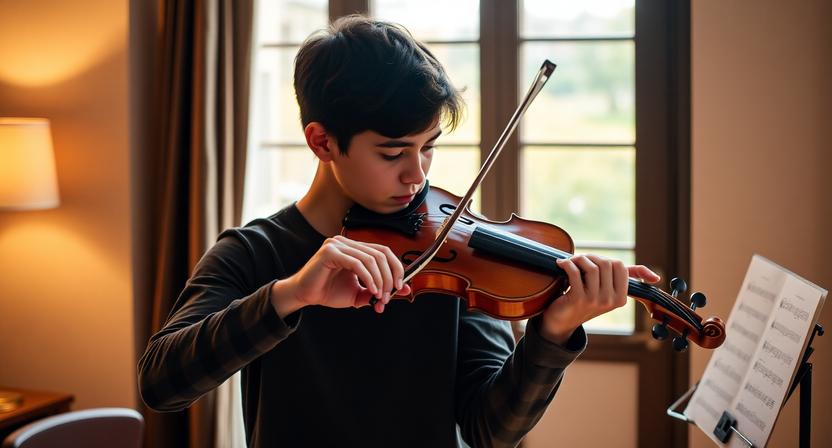
Learning the violin is a rewarding journey, but progress rarely happens overnight. Whether you’re a complete beginner or considering lessons, understanding the typical learning timeline can help set realistic expectations. Today’s blog post will answer the question of how long it takes and what factors affect it. How Long Does It Take to Learn Violin? Learning the violin is a gradual process: playing simple songs can take anywhere from 3 to 6 months, while reaching an intermediate level can take 1 to 2 years. If you want to become a professional and perform, it can take anywhere between 3 and 5 years, depending on your dedication. Numerous factors impact this speed, which we will cover below. Factors That Affect Learning Speed Numerous factors impact this speed, which we will cover below. 1. Practice Frequency How often you practice has a major impact on your progress. Short, consistent practice sessions are usually more effective than occasional long sessions. A student who practices 20 to 30 minutes daily will typically improve faster than someone who practices only once or twice a week. Consistency helps build technique, muscle memory, and confidence. 2. Consistency Consistency is just as important as the amount of time you spend practicing. Regular practice helps reinforce techniques and prevents skills from fading between sessions. Even brief daily practice can produce better results than infrequent practice. Maintaining a steady routine allows you to build momentum and make gradual, long-term progress. 3. Length of Practice Sessions The length of each practice session can influence how effectively you learn the violin. Beginners often benefit from focused 20- to 30-minute sessions, while more advanced players can practice longer. However, quality matters more than quantity. Concentrated, distraction-free practice is generally more productive than spending hours practicing without focus. 4. Instruction Quality The quality of instruction can affect your learning speed. A skilled teacher can identify mistakes early, provide personalized feedback, and guide you through proper technique. Structured lessons help you avoid developing bad habits that can slow progress. Good instruction often leads to faster improvement and greater confidence. What Can You Expect as a Beginner? As a beginner, you need to first focus on a few things, which are: 1. Learning How to Hold the Violin One of the first skills beginners learn is how to hold the violin correctly. Proper posture and positioning help improve comfort, control, and sound quality. Developing good habits early can also prevent unnecessary strain and make it easier to learn more advanced techniques later. 2. Playing Simple Melodies After learning the basics, most beginners start playing simple melodies using a few notes and basic rhythms. Familiar tunes help build confidence while allowing students to practice finger placement, timing, and coordination. This stage provides an encouraging introduction to playing the violin. 3. Developing Basic Bow Control Bow control is essential for producing a clear and consistent sound. Beginners learn how to move the bow smoothly across the strings, while maintaining proper pressure and direction. Developing this skill takes practice but forms the foundation for better tone and more advanced techniques. 4. Reading Simple Sheet Music Learning to read simple sheet music helps beginners understand notes, rhythms, and musical symbols. As reading skills improve, students can play a wider variety of songs without relying on memory alone. This ability becomes increasingly important as violin pieces grow more challenging. Conclusion Learning the violin takes time, but consistent practice and patience can help you reach your goals faster and enjoy steady progress.